



Move from knowing syntax to explaining a solution
A data structures problem asks you to make a choice: how should the information be organised, what operations must work, and how will you know the result is correct? This course brings those questions together with the arrays, linked lists, stacks, queues, trees, graphs and algorithms in the syllabus below.
What should you be comfortable with first?
Before tackling timed problems, practise variables, conditions, loops, functions and reading a small program in a language you know. Try tracing the values by hand and explaining an error message. If those steps still feel unfamiliar, bring a short example to the demo class and ask what preparation would help.
Ask which programming language your batch uses and how much language revision is included. The course's published topics include pointers; how they are taught depends on the language. These are preparation suggestions, not additional admission requirements or a promise that every language is taught.
A useful order for practice
- Start with a small input. Trace a search or sort on paper, including what happens when the input is empty or the value is absent.
- Choose the structure. Explain the operations you need before selecting an array, linked list, stack or queue. The same information can be organised in different ways.
- Write and test a clear solution. Check ordinary inputs and boundaries. A program that compiles has not yet demonstrated that it solves the problem.
- Discuss time and space. Describe how the amount of work and storage change as the input grows. Keep the assumptions visible when comparing approaches.
- Build towards harder topics. Apply the same explanation-and-testing habit to trees, graph traversal, greedy choices and dynamic programming in the outline.
A practice exercise: model a small help-desk queue
Illustrative exercise: use made-up ticket IDs to model a queue. This is a suggested learning example, not a delivered client system or a guaranteed batch assignment. Ask your trainer how practical work is chosen and reviewed.
Add tickets A, B and C, serve one, then add D. For an ordinary first-in, first-out queue, A is served first and B is next. Decide what your program returns when there is nothing to serve. Keep priorities, cancellations and multiple staff out of the first version; those would change the problem.
Write down the operations, your chosen representation, expected results and actual results. Explain why your implementation fits those operations. As one language-specific example, Python's data structures tutorial distinguishes stacks from queues and recommends a deque for efficient operations at either end. Confirm the equivalent approach in the language your batch uses.
What to ask at a demo
- Which language and starting skills does this batch assume?
- How are practice solutions reviewed, including incorrect approaches?
- What teaching hours, homework and assessment fit into the two months?
- How does this course differ from the separate interview-preparation course?
The published fee is ₹13,999 including GST for two months. Confirm the current timetable and any software requirements with admissions. Placement assistance does not guarantee an interview result or a job. Read the admissions information before deciding.
Data Structure
Course Highlights
- Introduction to Data Structure
- Algorithms
- Performance Analysis
- Asymptotic Notations
- Pointers
- Stacks
- Stack implementation
- Queue implementation
- Binary Tree
- Trees
- Dynamic Programming
- Greedy Method
Data Structure & Algorithm Course Details
1) Introduction to Data Structure
2) Arrays
- One dimensional and two dimensional
- Operations
- Insert, Delete and traversal
3) Pointers
4) Stacks
- What is Stack ?
- Operations
- Push , Pop and display
5) Queues
- What is Queue?
- Operations
- Enqueue, dequeue and display
6) HashTables
7) Linked List
- Singly
- Doubly
- Circular
8) Tree
- B tree
- AVL
- BST
9) Algorithm
10) Asymptotic Notations
11) Searching – Linear, Binary and ternary
12) Greedy Algorithm
13) Dynamic Programming
14) Graphs
- Introduction
- DFS
- BFS
15) Sorting
-
- Bubble Sort
- Selection Sort
- Insertion Sort
- Merge Sort
- Quick sort
Small Batches
Mentoring By Experts
Flexible Schedule
Learn By Doing
Goal Oriented
How a batch runs
Classes are online or at F-19/8, 3rd Floor, Sector 8, Rohini, Delhi – 110085. You get project work, a training certificate, and placement assistance. Advertised course fees include GST. Confirm the timetable, teaching hours, trainer, software costs and any instalment terms before enrolling. Ask the counselling desk about the next start date — call 18008913982.
Learn in a real classroom
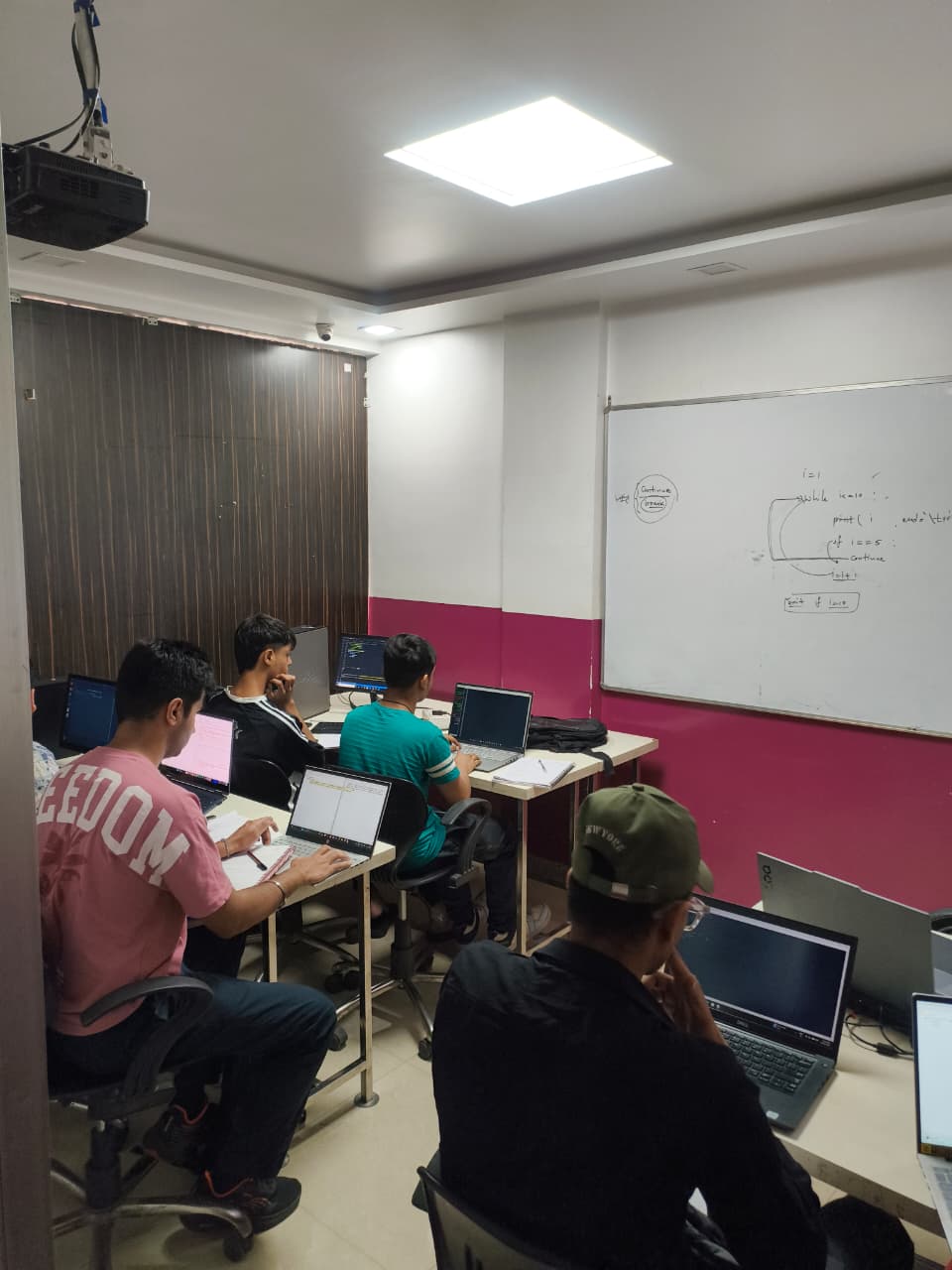
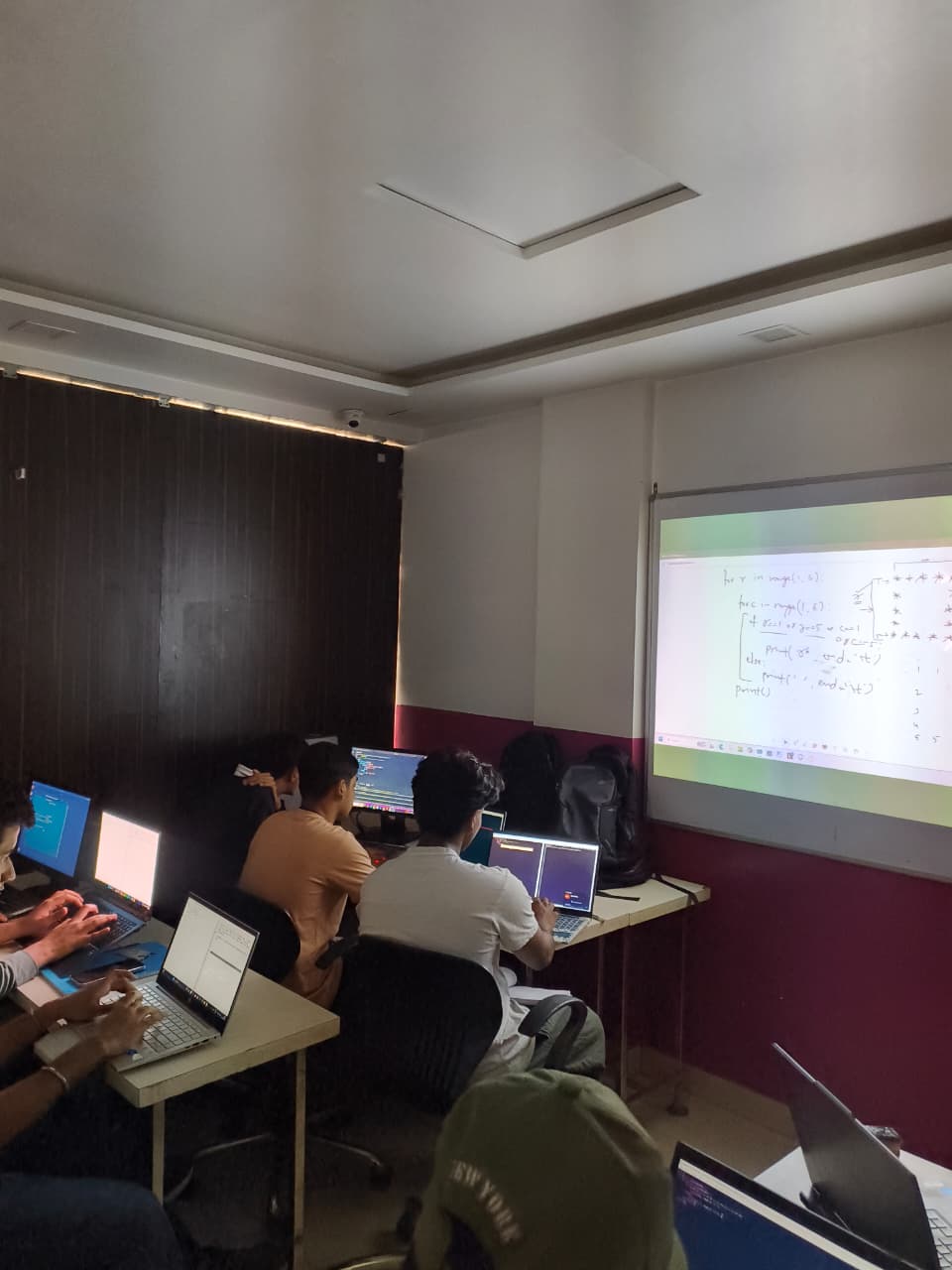
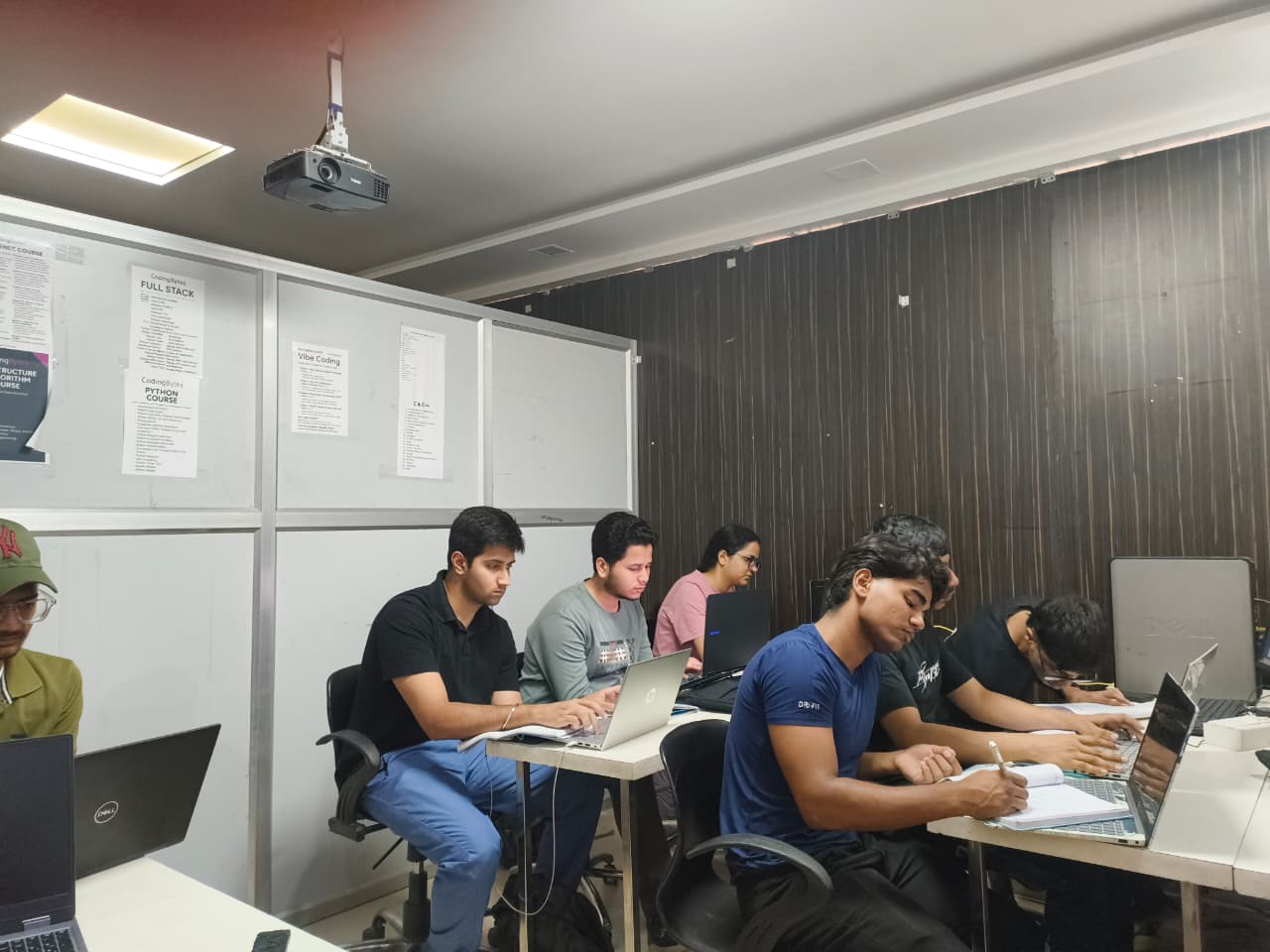
Classes run in our lab at F-19/8, 3rd Floor, Sector 8, Rohini, Delhi – 110085 in batches of up to 8 students, with a trainer beside you, or live online. Come for a free demo class and see it for yourself.
Frequently asked questions
What is the fee for Data Structures & Algorithm?
The fee is ₹13,999, GST included. Easy EMI is available on the diploma and longer courses; the counselling desk explains the current plan and the next batch date.
How long is Data Structures & Algorithm?
The course runs for 2 months. Weekday and weekend batches are available.
Are classes online or at the Rohini campus?
Both. You can study at the Coding Bytes campus in Sector 8, Rohini, Delhi, or join live, instructor-led online classes. You can book a free demo class first.
Who can join this course?
Students who have completed Class 12, graduates and working professionals can join. Basic English and basic computer knowledge are needed.
Will I get a certificate?
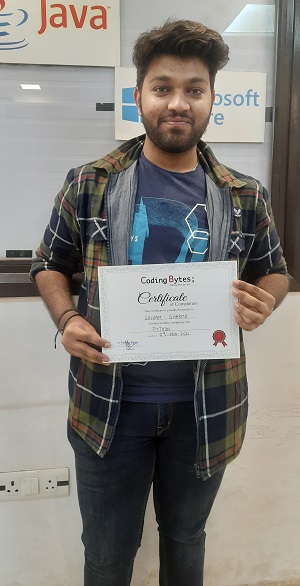
Yes. You receive a Coding Bytes course certificate when you complete the course. Coding Bytes is an ISO 9001:2015 certified institute.
Do you help with placements?
Yes. Every student gets placement assistance: interview preparation and help finding openings. It is assistance, not a job guarantee.