
C & C++
Course Highlights
- Introduction to Programming
- Type of Softwares
- Operating Systems
- Fundamentals in C
- Control statements
- Dynamic memory allocation
- Object Oriented Programming
- Manipluators
- Constructors
- File System
- Operator Overloading
C & C++
1) Introduction to Programming
- Program and Programming
- Programming Languages
- Types of software’s
- Operating Systems
- Dos commands
- Basic Linux commands and vi editor
- Compiler, Interpreter, Loader and Linker
- Keywords
- Variables
- Data Types
- Declaration of Variable
- Assigning Values to Variables
- Initialization
- Comments
- Const Qualifier
- Basic Structure of a ‘C’ program
- Programming Examples
2) Fundamentals in C
- History of ‘C’
- A Simple C Program
- Program execution phases
- Backslash character constants
- Character set
- Constants
- Number systems
- Format specifiers
- Identifiers
- The assignment operators
- The conditional operator
- The size of operator
- The comma operator
- Type casting operator
- Other operators
- Precedence and order of evaluation
- Programming Examples
- FAQ’s
3) Operators & Expressions
- Dealing with all 45 operators
- Arithmetic operators
- Increment and decrement operators
- Relational operators
- Logical operators
- The bitwise operators
4) Data Types
- Modifiers
- Format specifiers
- Dealing with each data types
- Memory representation of each type
- Programming Examples
5) Input-Output Library Functions
- Unformatted I-O Functions
- Single Character Input-Output
- String Input-Output
- Formatted I-O Functions
- printf() Width Specifier
- scanf() Width Specifier
- Programming Examples
6) Control Statements
- Conditional Control Statementsif
- if-else
- nested if-else
- else-if ladder
- Multiple Branching Control Statement
- switch-case
- Loop Control Statements
- while
- do-while
- for
- Nested Loops
- Jump Control statements
- break
- continue
- goto
- exit
- return
- FAQ’s
7) Function
- What is function?
- Why function?
- Advantages of using functions
- Function Prototype
- Defining a function
- Calling a function
- Return statement
- Types of functions
- Recursion
- Nested functions
- main() function
- Library Function
- Local and global variables
- Programming Examples
- FAQ’s
8) Storage Class
- Types of storage class
- Scoping rules
- Dealing with all storage classes
- Programming Examples
- FAQ’s
9) Pointer
- Def of Pointer
- Declaration of Pointer Variables
- Assigning Address to Pointer
10) Variables
- De-referencing Pointer Variables
- Pointer to Pointer
- Pointer Arithmetic
- Pointer comparisons
- De-reference and increment pointer
- pointer to const data
- const pointer
- const pointer to const data
- Void pointer or Generic Pointer
- Null pointer
- wild pointer
- Programming Examples
- FAQ’svironment
11) Pointer & Function
- Parameter Passing Techniques – call by value, call by address
- Using Pointers as Arguments
- Function Returning value
- Returning More than one value From A
- Functions Returning Address
- Function Returning Pointers
- Dangling pointer
- Pointer to a Function
- Calling A function through function pointer
- passing A function’s address as an Argument to other function
- Functions with variable number of arguments
- Programming Examples
- FAQ’s
12) Array
- One dimensional arrays
- Declaration of 1D arrays
- Initialization of 1D arrays
- Accessing element of 1D arrays
- Reading and displaying elements
- Two dimensional arrays
- Declaration of 2D arrays
- Initialization of 2D arrays
- Accessing element of 2D arrays
- Reading and displaying elements
- Programming Examples
13) Pointer & Array
- Pointer and one dimensional arrays
- Subscripting pointer variables
- Pointer to an array
- Array of pointers
- Pointers and two dimensional arrays
- Subscripting pointer To an array
- Programming Examples
- FAQ’s
14) Array & Function
- 1D array and function
- Passing individual array elements to a function
- passing individual array elements address to a function
- passing whole 1d array to a function
- 2D array and function
- Passing individual array elements to a function
- passing individual array elements address to a function
- passing whole 2d array to a function
- using arrays of function pointer
- Programming Examples
- FAQ’s
15) Dynamic Memory Allocation
- malloc()
- calloc()
- realloc()
- free()
- Core dump
- Memory leak
- Dynamic 1D and 2D Arrays
- Programming Examples
- FAQ’s
16) Strings
- Strings versus character arrays
- Initializing strings
- Reading string
- Displaying string
- The %s format specifier
- The gets() and puts() functions
- string handling functions
- string pointers
- Two-dimensional character arrays or array of string
- array of pointers to strings
- Programming Examples
- FAQ’s
17) Object Oriented Programming C++
- Principle of Object Oriented Programming
- Software evaluation
- Oop paradigm
- .Basic concept of Oop
- .Benefits of Oop
- .Application of Oop
18) Functions
- Introduction to C++
- Tokens
- Keywords
- Identifiers
- .Constants
- Operators
- Manipulators
- Expressions and control structure
- Pointers
- Functions
- Function prototyping
- Parameters passing in functions
- Values Return by functions
- Inline functions – friend and virtual functions
19) Classes
- Classes, objects, constructors and destructors
- Operator overloading
- Type conversions
- Type of constructors
- Function over loading
20) Inheritance
- Inheritance
- Type of inheritance
- Function
- Polymorphism
- Constructors in heritance
- Mapping console I\O operations
21) Files
- Files – File stream – File operators
- File pointer
- Error handling during file operations
- Command line arguments
Small Batches
Mentoring By Experts
Flexible Schedule
Learn By Doing
Goal Oriented
How a batch runs
Classes are online or at F-19/8, 3rd Floor, Sector 8, Rohini, Delhi – 110085. You get project work, a training certificate, and placement assistance. Advertised course fees include GST. Confirm the timetable, teaching hours, trainer, software costs and any instalment terms before enrolling. Ask the counselling desk about the next start date — call 18008913982.
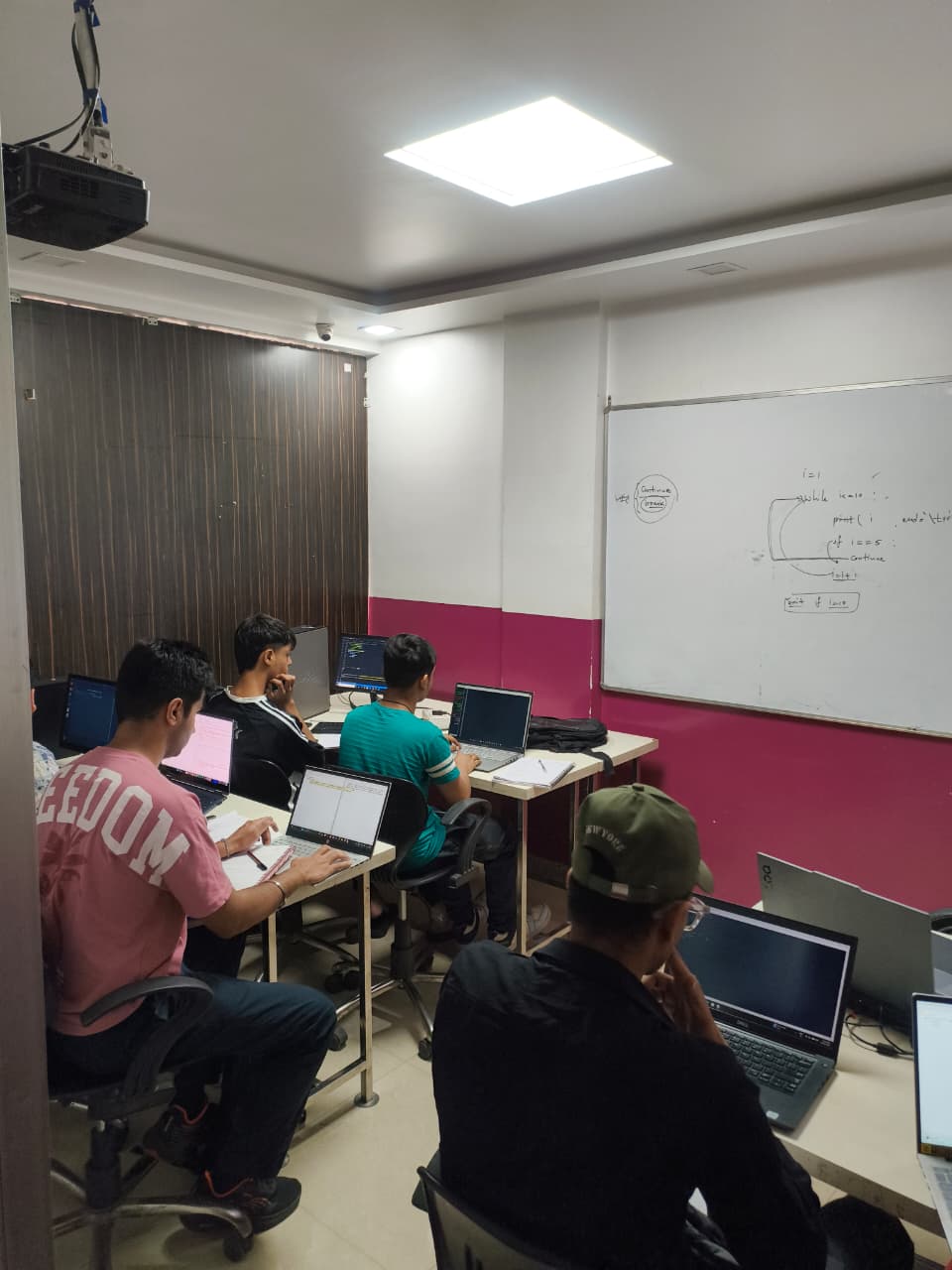
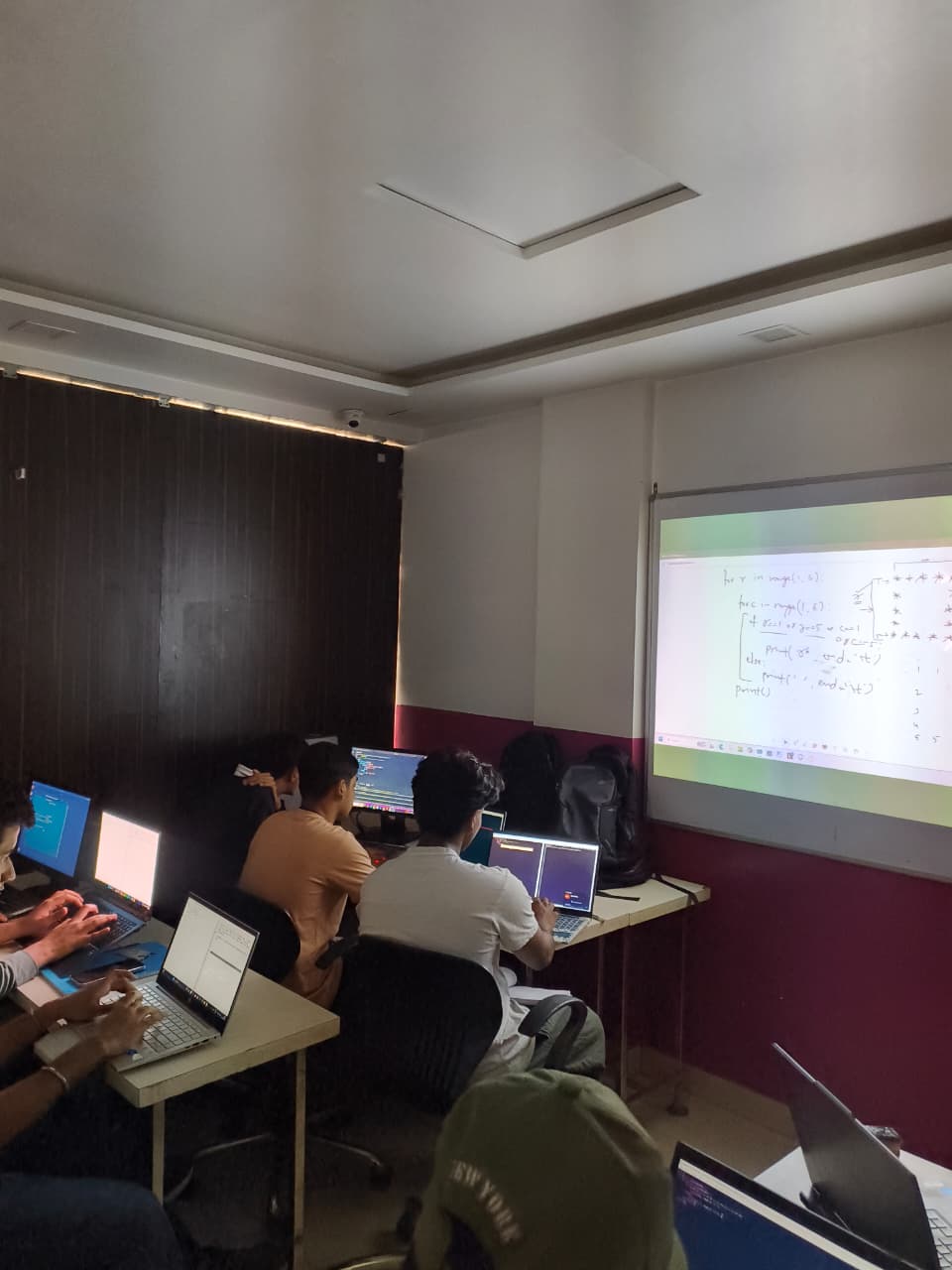
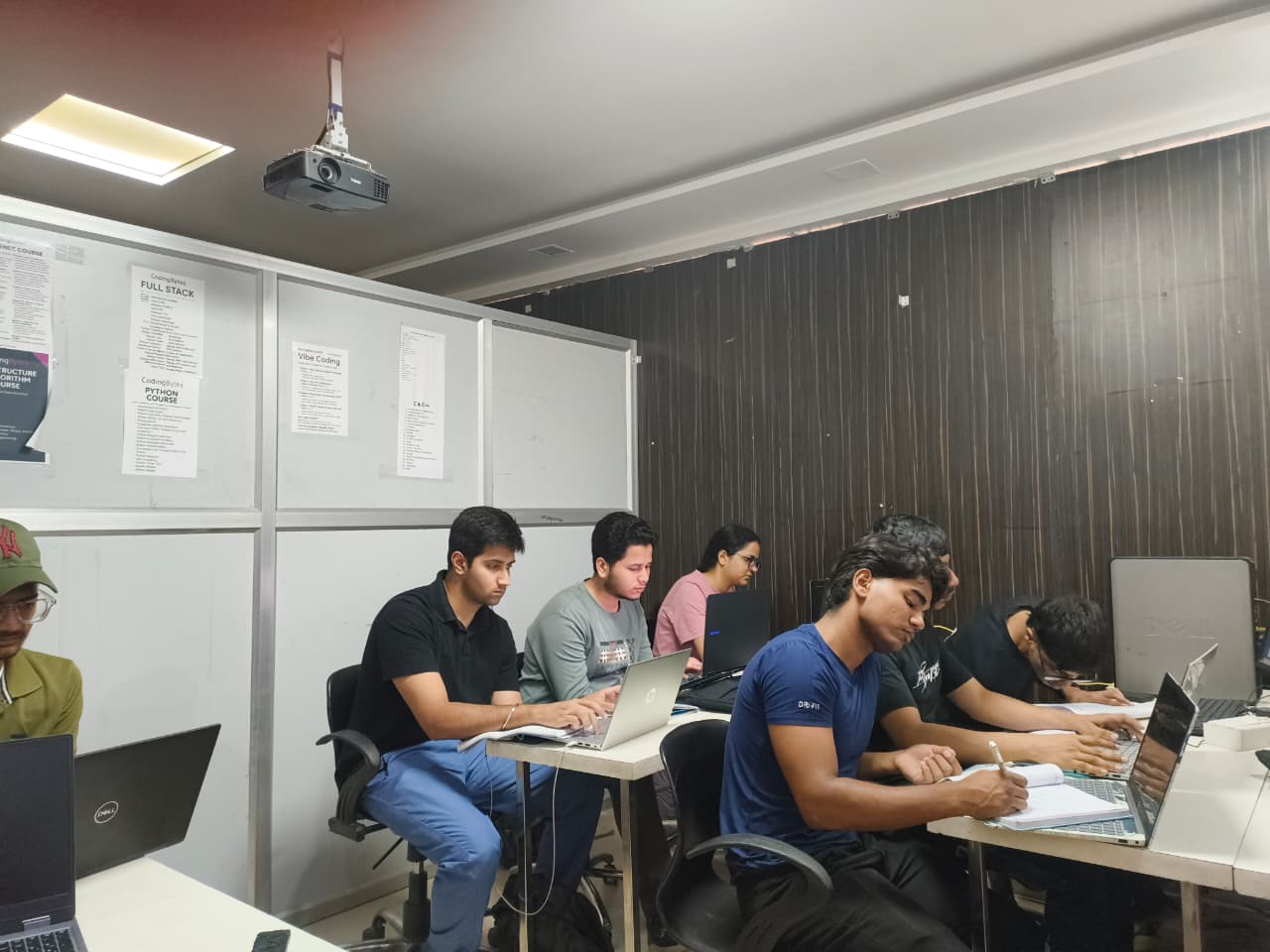
Learn in a real classroom
Classes run in our lab at F-19/8, 3rd Floor, Sector 8, Rohini, Delhi – 110085 in batches of up to 8 students, with a trainer beside you, or live online. Come for a free demo class and see it for yourself.
Frequently asked questions
What is the fee for C & C++ Programming Course?
The fee is ₹17,999, GST included. Easy EMI is available on the diploma and longer courses; the counselling desk explains the current plan and the next batch date.
How long is C & C++ Programming Course?
The course runs for 3 months. Weekday and weekend batches are available.
Are classes online or at the Rohini campus?
Both. You can study at the Coding Bytes campus in Sector 8, Rohini, Delhi, or join live, instructor-led online classes. You can book a free demo class first.
Who can join this course?
Students who have completed Class 12, graduates and working professionals can join. Basic English and basic computer knowledge are needed.
Will I get a certificate?
Yes. You receive a Coding Bytes course certificate when you complete the course. Coding Bytes is an ISO 9001:2015 certified institute.
Do you help with placements?
Yes. Every student gets placement assistance: interview preparation and help finding openings. It is assistance, not a job guarantee.